

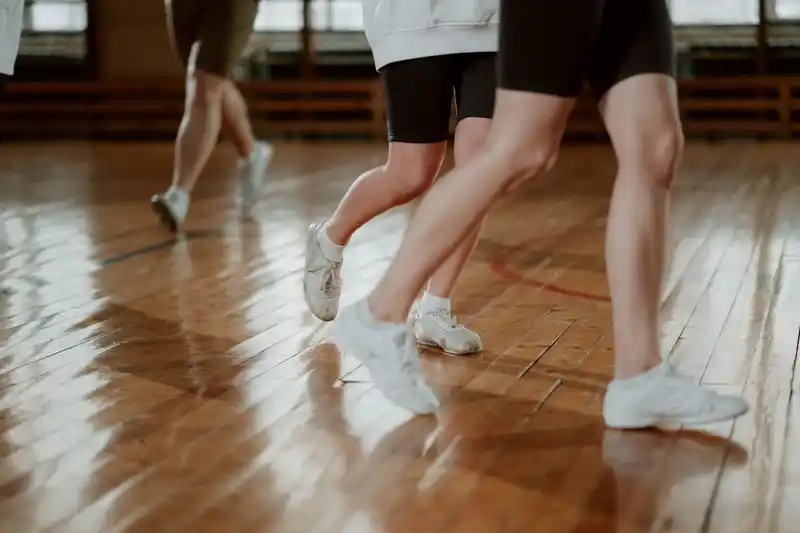
Floorball and ice hockey share a common visual language. Both are fast-paced team sports played with sticks and a small projectile, both feature a goalkeeper defending a net, and both reward quick thinking, precise passing and coordinated team movement. To the uninitiated, the two can appear almost interchangeable. In practice, however, they differ substantially in origin, infrastructure, accessibility, rules and the physical demands they place on their players. Understanding those differences illuminates not only the sports themselves, but the broader social and economic contexts in which they thrive.
Origins and Historical Relationship
Ice hockey’s origins are traced to the frozen lakes and rivers of Canada in the mid-nineteenth century, with the first recorded indoor game played in Montreal in 1875. The sport spread rapidly through North America and northern Europe, becoming deeply embedded in the cultural identity of countries like Canada, Finland, Sweden, Russia and the Czech Republic. By the twentieth century it had established itself as one of the world’s premier professional sports, with the National Hockey League in North America and various elite European leagues drawing enormous audiences and revenues.
Floorball emerged much later and, in many ways, in direct response to ice hockey’s limitations. Swedish physical education teachers in the early 1970s began adapting stick-and-ball play for ordinary gymnasium floors, using lightweight plastic sticks and perforated balls that could be used safely indoors without ice, skates or expensive infrastructure. The International Floorball Federation notes in its official history that the sport grew organically from these educational settings before acquiring a formal governance structure with the founding of the IFF in 1986. The connection to ice hockey was never hidden — early players drew explicitly on hockey tactics and terminology — but floorball quickly developed its own identity and rule set.
Playing Surface and Infrastructure
The most fundamental practical difference between the two sports is the playing surface. Ice hockey requires a sheet of ice maintained at precise temperatures, typically between minus five and minus nine degrees Celsius for competitive play, within an enclosed rink structure. The infrastructure required is substantial: refrigeration systems, ice resurfacing equipment, protective glass and boards designed to withstand high-impact collisions. Building and operating an ice rink is a significant capital investment that places the sport out of reach for many communities and countries.
Floorball, by contrast, is played on a standard indoor sports hall floor — the same surface used for basketball, handball or volleyball. The official playing area measures 40 by 20 metres, enclosed by 50-centimetre rounded boards, but the sport can be played in almost any hall with sufficient space. This difference in infrastructure requirement is directly connected to the sport’s global spread: countries in Asia, Africa and South America that lack the climate or capital for ice rinks can adopt floorball with minimal investment. The International Floorball Federation had 82 member associations by the early 2020s, a reach that reflects this accessibility advantage.
Equipment
Equipment differences between the two sports are similarly pronounced. Ice hockey players wear extensive protective gear: a helmet with cage or visor, shoulder pads, elbow pads, gloves, shin guards, padded trousers and skates. The ice hockey stick, traditionally made from wood and more recently from composite materials, is heavier and more robust than its floorball equivalent. Goaltenders in ice hockey wear additional substantial padding covering virtually the entire body.
Floorball equipment is considerably lighter and simpler. Players wear shin guards and, in some leagues, eye protection, but the absence of skates and heavy body armour means the sport is far less physically restrictive. The floorball stick — typically constructed from fibreglass or carbon fibre composite — weighs between 200 and 350 grams, a fraction of an ice hockey stick’s weight. Unihoc, one of the sport’s longest-established equipment manufacturers with roots going back to 1973, has documented how floorball stick design has evolved from basic plastic construction to sophisticated composite engineering, with shaft flex, blade hardness and grip design all calibrated to different playing styles and positions. Goalkeepers in floorball wear padded trousers, a helmet with full cage and a chest protector, but the overall equipment profile remains far less bulky than in ice hockey.
The ball itself — 72 millimetres in diameter, weighing between 22 and 23 grams, with 26 holes to regulate airflow and speed — is standardised by the IFF and represents a deliberate design choice: fast enough to reward skill, predictable enough to be controlled on a hard floor surface.
Rules and Game Structure
Both sports are played in three periods, though floorball periods last 20 minutes of effective playing time at elite level, with the clock stopping for every interruption, while ice hockey uses the same structure at professional level. Both sports allow substitutions on the fly, meaning players can be changed without stopping play, which contributes to the high tempo that characterises both games.
The rule differences are more meaningful than they might initially appear. Physical contact in ice hockey is not only permitted but central to the game’s character — body checking, board play and physical battles for the puck are integral elements of strategy and spectacle. Floorball prohibits body checking entirely. Players may position themselves between an opponent and the ball, but deliberate physical contact results in a two-minute suspension. This single rule difference substantially changes the game’s dynamics, making floorball more reliant on technical skill, speed of movement and tactical positioning than on physical dominance.
Offside rules differ as well. Ice hockey uses a strict offside system based on the blue lines dividing the rink into three zones, while floorball has no offside rule, allowing players to move freely across the entire playing surface. This absence of offside opens up the game considerably and is one reason floorball can appear faster and more free-flowing than ice hockey to a first-time viewer.
Physical Demands and Athlete Profile
Ice hockey players develop a highly specific athletic profile centred on skating ability. Explosive power in the legs, balance on skates and the coordination required to handle a stick at speed on ice take years to develop and represent a significant barrier to entry for late starters. The physical contact dimension also means that size and strength play a more prominent role at elite level than in many other team sports.
Floorball demands a different combination of qualities. Agility, change of direction speed, spatial awareness and technical precision with the stick are the primary athletic currencies. Because the sport is played on foot, the movement patterns are more transferable from other sports, and players can reach a functional level of competence considerably faster than in ice hockey. Svenska Innebandyförbundet’s participation data consistently shows a wide age distribution among active players, with meaningful numbers playing competitively well into their forties — a profile that reflects both the sport’s lower physical toll and its strong recreational culture.
Accessibility and Social Reach
The accessibility gap between the two sports extends beyond infrastructure into cost. A complete set of youth ice hockey equipment can run to several hundred euros, and ice time is an ongoing expense that places significant financial pressure on families. Floorball’s entry costs are negligible by comparison: a stick, a pair of appropriate indoor shoes and access to a sports hall are sufficient to begin playing at a basic level.
This cost difference has social implications that go beyond individual families. Riksidrottsförbundet, Sweden’s central sports organisation, has in multiple reports on youth participation identified affordability as a primary driver of which sports succeed in reaching children from lower-income backgrounds. Floorball’s cost profile gives it a structural advantage in this regard that ice hockey, for all its cultural prestige in certain markets, cannot easily replicate.
Competitive Landscape and Global Reach
Ice hockey’s global competitive landscape is dominated by a small number of nations — Canada, Russia, Finland, Sweden, the United States and the Czech Republic account for the vast majority of World Championship medals — and the professional leagues, above all the NHL, set the cultural and commercial agenda for the sport worldwide.
Floorball’s competitive map is somewhat broader, though still concentrated in Scandinavia and Central Europe. Sweden, Finland and Switzerland have historically dominated the World Championships, but nations including the Czech Republic, Latvia and Germany have established themselves as consistent contenders. The sport’s expansion into Asia — particularly Japan and Singapore — and into parts of the Americas suggests a genuine diversification of the global talent pool, though the gap between the established powers and emerging nations remains wide.
Cultural Identity and Overlap
In the countries where both sports coexist at a high level — Sweden and Finland most prominently — there is a complex cultural relationship between the two. Many floorball players grew up watching ice hockey and carry its tactical vocabulary into their floorball game. Coaches move between the sports. The visual similarity means that television audiences can follow floorball without a lengthy orientation period.
At the same time, floorball has developed a distinct identity that resists being defined purely in relation to ice hockey. It is a sport with its own history, its own heroes and its own culture — one that grew not from arenas and professional leagues but from gymnasium floors and community sports halls. That origin shapes what the sport is and, perhaps more importantly, what it aspires to be.